How to Read a Luxury Cruise Itinerary Before You Book It
A cruise itinerary is more than a destination list. It shows you the whole trip, such as when the ship will arrive at and depart from ports, when you’ll have to stay in the sea and the experiences available along the way. For a luxury cruise, understanding these details helps you choose a route that matches your interests and preferred pace of travel.
Before booking, look beyond destination names and check how much time you will have at each port, check whether all your onboard facilities come with the basic rate, and find out whether additional costs may arise for guided excursions and other kinds of tour. These details help you compare itineraries and understand what your cruise experience will actually involve.
The itinerary can also influence how much you enjoy your overall cruise experience. A 2026 industry survey found that 81% of travel advisors considered destinations and itineraries important when selecting a cruise, while 66% highlighted trip length. Reviewing port visits, time ashore, and the total duration before booking can help you choose a luxury cruise that suits your travel preferences.
What to Consider Before Booking a Luxury Cruise Itinerary
When choosing your cruise, don’t forget to focus on those details that can shape your cruise experience. From destinations and port timings to onboard amenities and extra costs, a little research can help you choose the right sailing. You can also review these tips for choosing the perfect cruise itinerary before booking. Here are the key things to pay attention to.
1. Check the Cruise Duration and Travel Dates
Start by confirming the total number of nights, departure date, and return date. A seven-night luxury cruise may include several port visits,sea days, and time spent traveling between destinations. It is these aspects that give you an idea on how much of your vacation will be spent exploring a new destination and chilling on the ship.
Besides that, be aware that the main port of a cruise destination may not be the one where the actual port is located. Some cruise itineraries use nearby cities as their destination names, even when the actual port is located outside the city. For example, a cruise advertised as departing from Rome may actually leave from the port at Civitavecchia, and getting there will require additional ground transportation.
When deciding on the booking details, have a look at each of the following:
- The exact embarkation and disembarkation dates.
- Number of nights that are part of the package
- The ship’s departure and return ports.
- Whether you require a hotel stay before or after your cruise
- Time, and cost of reaching every port
These elements play a very big role in luxury vacation planning as the private transport, high-standard hotels and leisurely schedule can all be elements of the package.
2. Understand the Port Arrival and Departure Times
One of the most important steps in learning how to read a luxury cruise itinerary before you book it is understanding the times listed beside each destination.
An itinerary might show an arrival time of 8 a.m. and a departure time of 6 p.m. This does not necessarily mean you will have ten full hours to explore. The ship needs time to clear local authorities, and passengers may need to wait before going ashore.
You must also return before the ship’s stated departure time. The exact all-aboard deadline is provided by the cruise line and may vary by port.
The key factors to pay attention to the details are:
- Early arrivals: These can give you more time for sightseeing, although you may need to wake up early.
- Late departures: These may allow time for dinner, shopping, or evening excursions.
- Short port calls: This option is really suitable when you are looking to visit one main attraction that will be very close to the port location.
- Long port calls: These may allow more extensive sightseeing or a longer guided excursion.
Always compare the available time with the activities you want to enjoy. If visiting a historic landmark requires several hours of travel from the port, a short stop may not be practical.
3. Look at the Destinations, Not Just the Number of Ports
A cruise that visits six destinations is not automatically better than one that visits four. Your satisfaction with a cruise will also be largely determined by what each location has to offer you and how long you can stay there.
Get familiarized with each port city by its descriptions in the itinerary document and determine the activities which appeal to you. You might prefer historic cities, coastal villages, scenic landscapes, local food, or exclusive cultural excursions. A luxury cruise itinerary should match your interests rather than simply include as many destinations as possible.
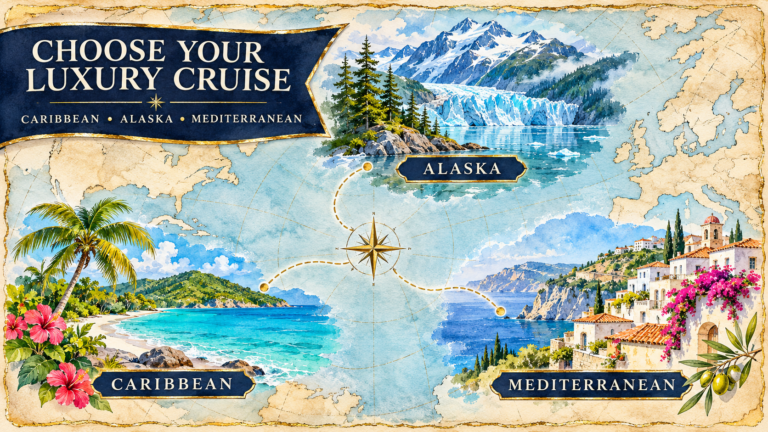
For example, a Mediterranean sailing might combine historic cities with coastal towns, while an Alaska cruise may focus on glaciers, wildlife, and scenic waterways.
Consider these questions when reviewing the destination list:
- Does each stop offer activities that interest you?
- Are the main attractions close to the port?
- Will you have enough time to explore without rushing?
- Does the route include destinations you have already visited?
- Are there opportunities for guided or private excursions?
A cruise itinerary that is designed thoughtfully may well provide better results than an itinerary packed with brief stops. Comparing different routes and destinations can also help you explore the best cruise deals that fit your travel preferences and budget.
4. Check for Sea Days and Scenic Cruising
Sea days refer to those days when the ship sails without making a scheduled port stop. Instead of going ashore, you can spend the day enjoying the onboard experience.
On a luxury cruise, such days can also be very satisfying, quite as much as visiting the destination. You might enjoy a spa treatment, relax by the pool, attend a culinary demonstration, or have a leisurely meal at one of the ship’s restaurants.
However, the placement of sea days matters. A day at sea after several busy excursions can provide a welcome break. Multiple consecutive sea days may suit travelers who enjoy spending time onboard, but they might disappoint those who prefer daily sightseeing.
You should also look for scenic cruising, which allows passengers to view natural landscapes from the ship without necessarily stopping at a port. This can be a highlight on itineraries featuring glaciers, fjords, or coastal waterways.
Before your booking, check out what each day on the ship schedule consists of and choose accordingly whether the balance between sightseeing and relaxation suits your preferences.
5. Identify Tender Ports and Docking Locations
Not every cruise ship docks directly beside the destination. At some ports, the ship anchors offshore and passengers travel to land in smaller boats called tenders.
A tender port can slow down your arrival to the shore especially if there are delays due to the weather or large number of passengers. You probably want to check if any of the destinations that you have in your voyage list require such service of tendering.
Besides that, it is also worth looking out to learn about the docking of the cruise ship. A port listed under the name of a famous city may be located a considerable distance from its main attractions.
These details can affect your excursion plans and transportation budget. You may need to arrange a shuttle, taxi, private driver, or guided tour to reach the places you want to visit.
If you have mobility requirements, review the cruise line’s tendering policies before making a reservation. Not all ships can safely transfer every passenger or mobility device in every sea condition.
6. Review Overnight Stays and Shore Excursions
Some luxury cruise itineraries include overnight stays in port or late-evening departures. This can give you the possibility of having more freedom if compared to a usual day in the city.
An overnight stop may give you time to experience local restaurants, evening entertainment, or cultural attractions after many day visitors have left. Nevertheless, it is better to see what the ship’s actual arrival and departure times are, instead of assuming an overnight stay provides two complete days.
Next, examine the available shore excursions. Luxury cruise lines may offer small-group experiences, private guides, culinary tours, historical visits, and exclusive activities.
Before booking an excursion, confirm:
- Its total duration and meeting point.
- Whether transportation is included.
- Whether meals, entrance tickets, or equipment are covered.
- How much free time remains at the destination.
- Whether the excursion is operated by the cruise line or an independent provider.
Don’t forget to factor the price of these activities into how much you’re paying for the cruise itself. A lower-priced sailing may require substantial additional spending on excursions, transfers, and sightseeing. Travelers coordinating flights with their cruise dates can also review interline travel options when arranging transportation to and from the departure port.
7. Understand What the Cruise Fare Includes
A luxury cruise itinerary indicates places and destinations you will be on the ship, but in many cases it does not list all the services you will be charged for.
Cruise lines use different definitions of luxury and include different services in their fares. For example, one cruise may have included luxury dining, certain beverages, tips, and tours, whereas another may charge for parts of them additionally.
Read more about what luxury cruise fares actually cover to understand which amenities and services you can expect to be included.
| What to check | Why it matters |
|---|---|
| Dining and beverages | Confirm which restaurants, drinks, and room-service options are included. |
| Shore excursions | Check whether guided tours are complimentary or separately priced. |
| Gratuities | Determine whether service charges are included in the fare. |
| Transfers | Find out whether airport, hotel, and port transportation is covered. |
| Wi-Fi and onboard activities | Check for package limits or additional fees. |
| Taxes and port charges | Confirm which mandatory costs are included in the advertised price. |
Also check the cancellation policy, deposit, and payment requirements. You may not have much flexibility when you change your plans depending on these factors. Comparing the total expected cost gives you a clearer picture of value than looking at the advertised fare alone.
8. Consider the Season and Direction of Travel
The time of year can influence the weather, daylight hours, crowds, and activities available at each destination. Two cruises going more or less on the same route might present a different experience based on their departure dates.
For example, an Alaska cruise in early summer may provide different daylight conditions and wildlife visibility from the one which sets sail later in the season. Mediterranean cruises can also vary in temperature and crowd levels throughout the year.
Make sure of the seasonal conditions that are expected at each destination on your voyage. If your plans require a particular outdoor activity, find out about their normal season of operations before your booking.
It is also important that the way you decide to travel will have an impact. Some itineraries begin and end in different cities, which can affect flights, hotel stays, and transportation arrangements. Check the route closely, and work out any extra expenses that might arise before making your choice.
9. Read the Itinerary Change Policy
Cruise itineraries can change because of severe weather, port congestion, safety concerns, or operational requirements. A listed destination is therefore not an absolute guarantee that the ship will visit it.
Read the cruise contract to understand the cruise line’s rights to modify the route and any applicable cancellation or compensation terms. Check what happens if a port is skipped or a scheduled arrival time changes.
It is also sensible to avoid arranging nonrefundable independent excursions too far in advance when the ship’s docking arrangements are uncertain.
Choose an itinerary that appeals to you as a complete journey, rather than one that depends entirely on a single destination. For a more personalized experience, travel planning services can help you compare luxury cruise options, coordinate travel arrangements, and plan the details around your sailing dates.
Make an Informed Luxury Cruise Booking
Learning how to read a luxury cruise itinerary before you book it helps you look beyond attractive photographs and destination names. By checking port times, sea days, excursion options, fare inclusions, seasonal conditions, and travel arrangements, you can better understand what your vacation will actually involve.
Take time to compare a few itineraries and consider how each one fits your budget, interests, and preferred pace. If you would like help reviewing routes, comparing cruise options, and arranging the details around your sailing, a travel planner can provide guidance based on your preferences.
The right luxury cruise is not necessarily the one that visits the most places. It is the one that gives you the destinations, comfort, and experiences you want without making the journey feel rushed.
Frequently Asked Questions
1. What is a luxury cruise itinerary?
A luxury cruise itinerary is a schedule showing the destinations, dates, arrival and departure times, sea days, and other details of a luxury cruise. It helps travelers understand the route and plan their activities before booking.
2. How do I know if a cruise itinerary is worth the price?
Compare the destinations, time spent in each port, onboard amenities, included excursions, dining, beverages, and transportation costs. Consider the total vacation expense rather than the advertised cruise fare alone.
3. What does a sea day mean on a cruise itinerary?
A sea day is a scheduled day when the ship does not visit a port. Passengers can use this time to relax, enjoy onboard amenities, attend activities, and explore the ship.
4. What is a tender port on a luxury cruise?
A tender port is a destination where the ship anchors offshore and passengers travel to land in smaller boats. Tendering can affect the time available for sightseeing and may depend on weather and sea conditions.
5. Can a luxury cruise itinerary change after booking?
Yes. Cruise lines may change destinations, routes, or arrival times because of weather, safety concerns, port congestion, or operational needs. Review the cruise contract to understand the applicable conditions.
6. Can a travel planner help me choose a luxury cruise itinerary?
Yes. A travel planner can help compare routes, departure dates, destinations, cabin options, excursions, and travel arrangements. This guidance can make it easier to select a cruise that fits your budget and travel preferences.
Choose Your Luxury Cruise with Confidence
Compare routes, departure dates, destinations, excursions, and travel arrangements to find an itinerary that fits your budget and travel preferences.
Explore ViaRajourneys